Lindsey Ma

I am a research assistant in the Department of Statistics at Columbia University, working on knowledge-guided multimodal reasoning and reliable evaluation of vision-language models.

My research interests include multimodal learning, knowledge-enhanced reasoning, computational neuroscience, self-supervised learning, and statistical machine learning. I am particularly interested in combining structured knowledge with foundation models and developing machine-learning methods for scientific data.

I received my M.S. in Statistics from Columbia University and my B.A. in Economics from Renmin University of China.

Portrait placeholder for Lindsey Ma

Research

My work focuses on machine-learning systems that integrate structured knowledge, multimodal models, and scientific data. I have worked on knowledge-guided visual reasoning, self-supervised denoising for neural imaging, connectome analysis, and EEG decoding.

Placeholder for neural imaging denoising project image

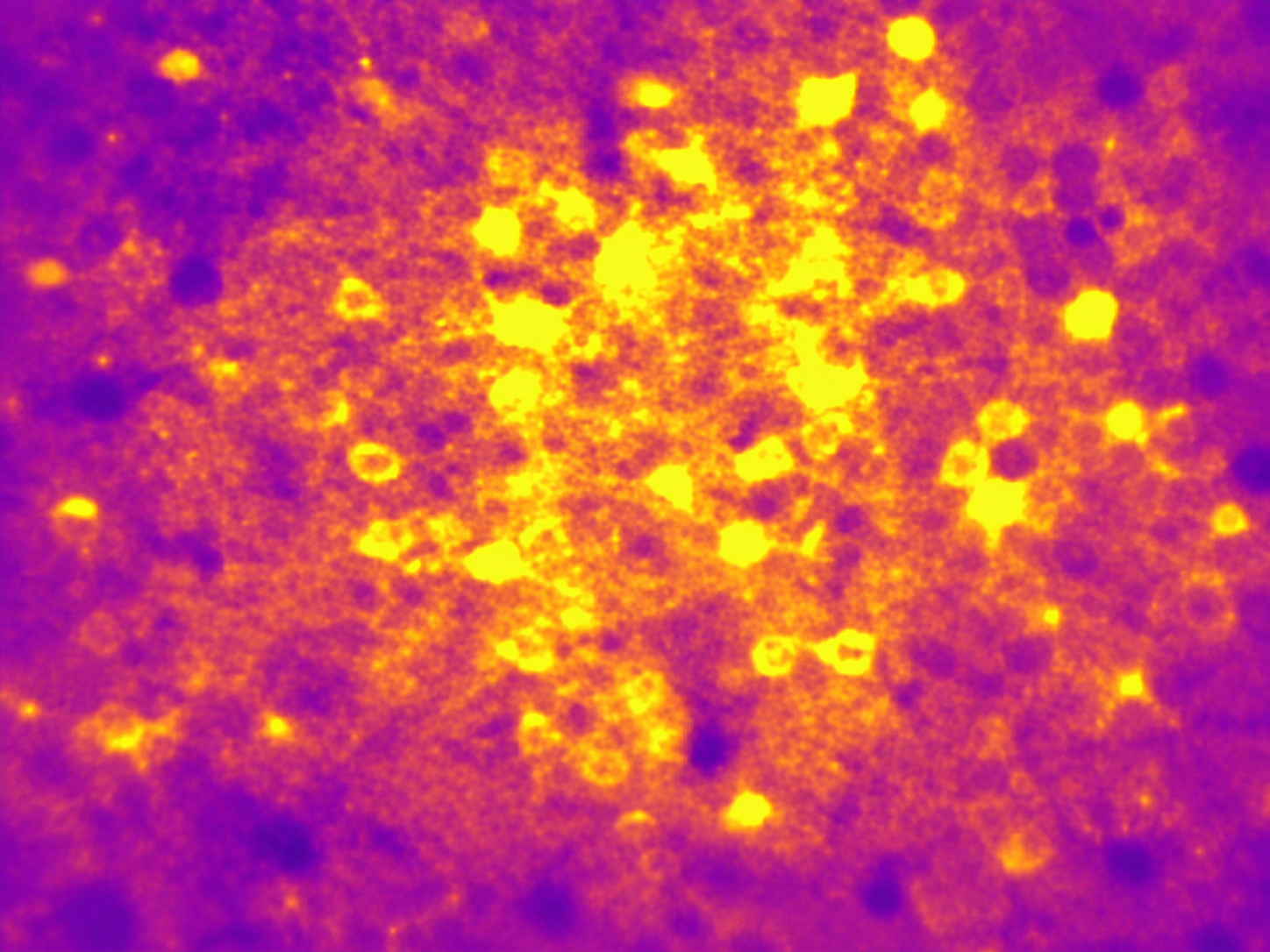
Self-Supervised Denoising of Neural Imaging Data

Research Assistant, Center for Theoretical Neuroscience, Columbia Zuckerman Institute
December 2024 – Present

Designed and implemented a four-direction masked blind-spot network in PyTorch for self-supervised spatial denoising of two-photon calcium-imaging movies, addressing temporally correlated noise while preserving neuronal morphology.

Ran ablations on masking direction, receptive field, and preprocessing settings across five imaging datasets and used simulated ground-truth data to evaluate recovery of latent signal structure.

Rebuilt the lab’s penalized matrix decomposition preprocessing pipeline, reducing residual video energy by 20% versus baseline and reducing variance in downstream decoding performance by 7%.

Computational neuroscience · Self-supervised learning · Neural imaging

Selected Projects

Placeholder for FlyWire connectome project image

Community Structure in the FlyWire Connectome

Computational Statistics Project, May 2025

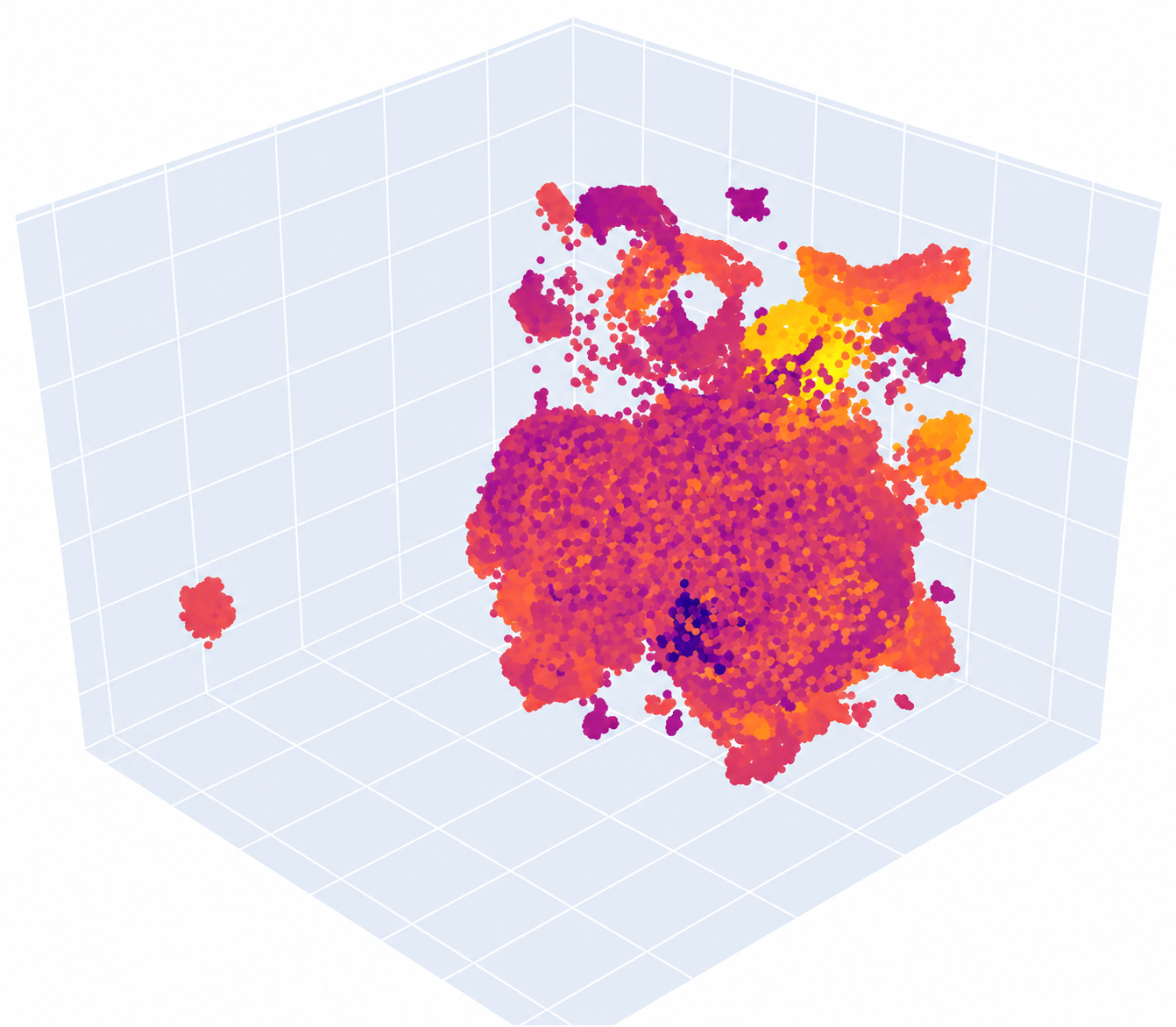
Applied Bayesian stochastic block models to the FlyWire connectome and evaluated inferred community structure using posterior predictive checks. Visualized graph embeddings with UMAP to characterize cell-type-specific connectivity patterns.

Bayesian modeling · Network science · Connectomics

Placeholder for EEG motor imagery decoding project image

Motor-Imagery Decoding from EEG

Brain–Computer Interface Lab Project, January 2025

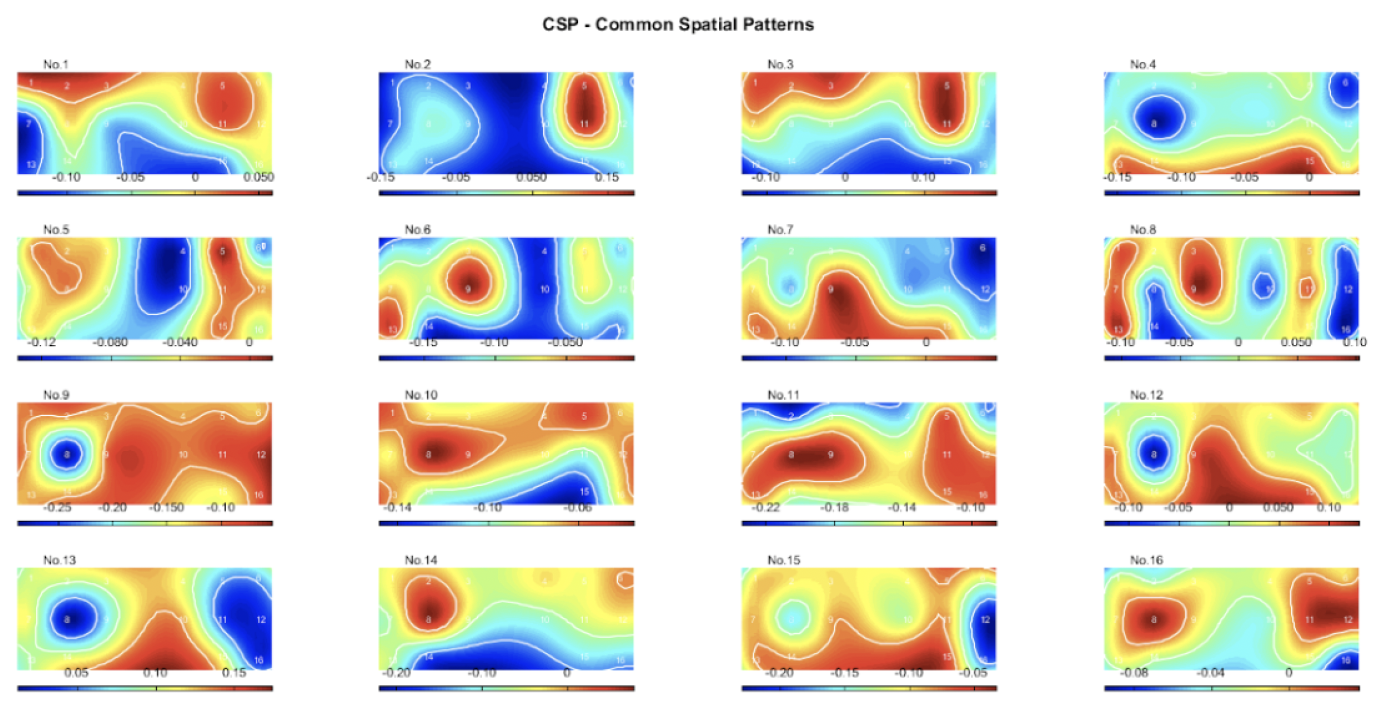
Extracted Fourier- and wavelet-based features from real-time EEG recordings and trained linear discriminant analysis classifiers for motor-imagery decoding, achieving 80% mean accuracy under five-fold cross-validation.

Brain–computer interfaces · Signal processing · Statistical classification

Education

Columbia University

M.S. in Statistics
September 2024 – May 2026

Neural Networks & Deep Learning, Advanced Machine Learning, Computational Statistics, Time-Series Modeling, Statistical Analysis of Neural Data, Robot Learning, Robotics Studio, and Brain–Computer Interface Lab.

Renmin University of China

B.A. in Economics
September 2019 – June 2023

Technical Skills

Programming & ML

Python, R, SQL, PyTorch, Hugging Face, scikit-learn

Systems & Tools

FastAPI, Docker, vLLM, Ollama, Neo4j

Research Areas

Multimodal learning, knowledge-guided reasoning, computational neuroscience, Bayesian modeling, time-series analysis, graph learning

Awards & Activities

Blockchain Hackathons — Team Leader

September 2025 – October 2025

Won second place at the XRPL Hackathon ($5,000) and third place at the Stellar Hackathon ($2,600). Led cross-functional teams to build StrataFi and venMorph in separate 24-hour hackathons, implementing smart-contract integrations, backend transaction-processing pipelines, and multi-wallet testing suites.

Columbia AI Alignment Club — Technical Fellow

February 2025 – May 2025

Selected for a technical fellowship focused on frontier-model risk, mechanistic interpretability, and advanced evaluations. Conducted technical reviews and discussions on neural activation steering, eliciting latent knowledge, and formalizing alignment objectives.